Astronomy | Science Infrastructure
James Webb Space Telescope API
Transforming distant light into shared understanding.
NASA/ESA/CSA/STScI
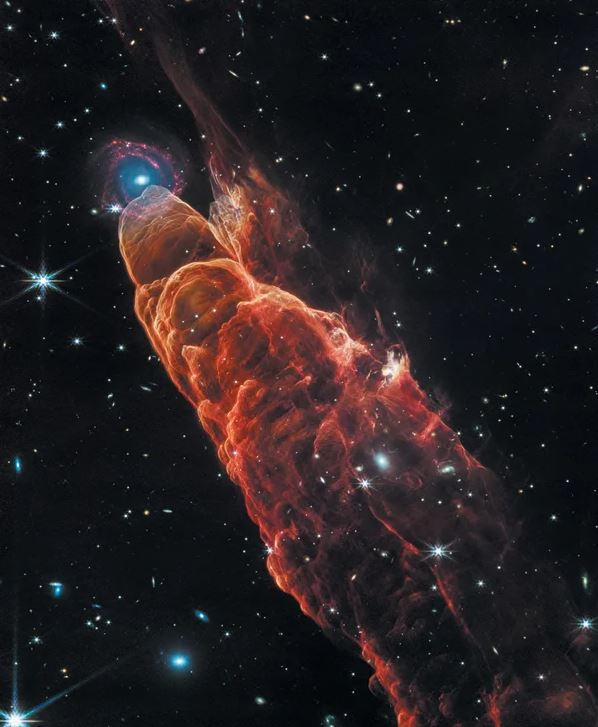
It’s midnight on Earth, but far beyond our atmosphere, the James Webb Space Telescope is awake and hard at work.
Ultra-cold, gold-coated mirrors deploy to collect infrared light. Photons emitted billions of years ago reach the telescope after traveling across an expanding universe. These signals contain measurable data about galaxy formation, stellar evolution, exoplanet atmospheres, and the chemical composition of the early cosmos, much of it predating Earth itself.
The Journey Behind the API
At Nebulum Labs, we asked a familiar question from a new angle:
What happens when the most powerful space telescope ever built becomes programmatically accessible?
The MAST archive holds an extraordinary volume of JWST data, including images, spectra, metadata, and proposals, but working with it often requires deep familiarity with astronomical tooling, formats, and archival systems.
We wanted to lower that barrier without flattening the science.
The result is a modern, open REST API that provides structured access to JWST imaging and spectroscopic observations, enabling researchers, educators, developers, and curious minds to explore the universe directly from their own tools and workflows.
This API (view repo here) was designed to give real and easy access to observation-grade science to anyone who wants access to it.
With the JWST API, you can:
– Retrieve high-resolution infrared images from instruments such as NIRCam, MIRI, and NIRISS
– Explore spectroscopic observations, including wavelength ranges, spectral resolution, and gratings
– Search data by target, coordinates, proposal, instrument, filter, date, or calibration level
– Work with imaging and spectral data through clear, purpose-built endpoints
From galaxies forming in the early universe to molecular signatures in exoplanet atmospheres, the API transforms Webb’s observations into data you can query, analyze, and build upon.
Why It Matters
The James Webb Space Telescope represents one of humanity’s most ambitious scientific efforts. Making its data accessible amplifies its impact.
Researchers can prototype analyses, explore datasets, and discover observations without wrestling with raw archives.
Educators can bring real JWST data into classrooms, grounding abstract astronomy in tangible evidence.
Developers can build visualizations, learning tools, and scientific interfaces that invite exploration.
Artists and storytellers can work directly with authentic cosmic data, translating deep space into human experience.
Citizen scientists can browse, search, and follow observations once reserved for specialized pipelines.
The rigor is already there. This API simply invites more minds to work with it.
The Structure Below the Stars
Behind the scenes, the API carefully organizes an otherwise overwhelming universe of information:
– Observation metadata aligned across instruments and proposals
– Imaging and spectroscopic products clearly separated yet interoperable
– Spectral attributes like wavelength ranges, resolution, and gratings preserved with scientific fidelity
– A PostgreSQL-backed system optimized for fast, expressive queries
– A FastAPI interface with automatic documentation for exploration and learning
Our goal with developing this API was to transform raw observatory data into something people can navigate, search, and reuse.
How to Explore the Universe
You don’t need institutional access or specialized software to begin.
Query the API. Browse the data. Follow a proposal. Search a patch of sky.
All endpoints and documentation are available here:
JS
.then(response => response.json())
.then(data => console.log(data));
NASA/ESA/CSA/STScI
Why We Share This
Science advances fastest when access expands.
By opening a programmatic doorway to JWST data we are supporting a culture of inquiry, collaboration, and imagination.
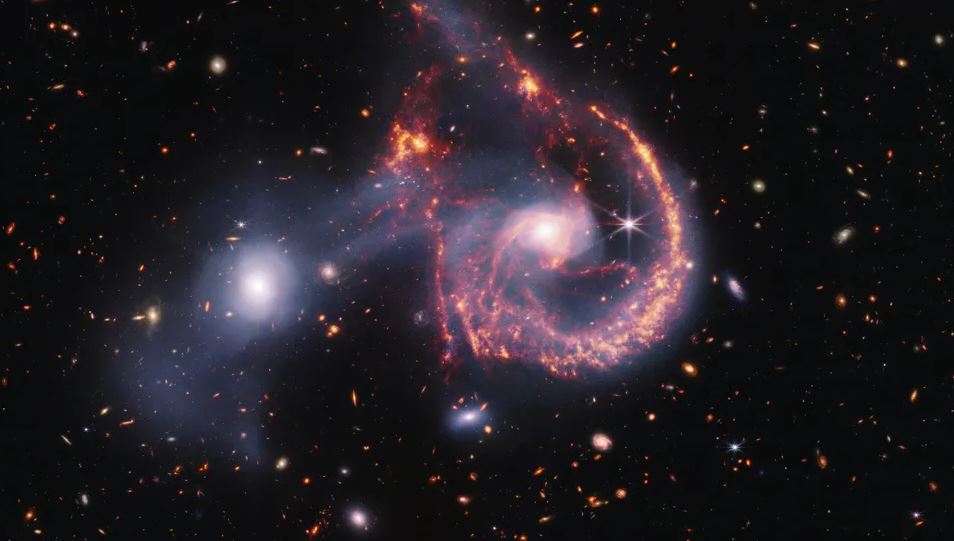
Every spectrum tells a chemical story. Every image is a time capsule. Every observation reminds us that the universe is vast, structured, and still deeply mysterious.
Whether you are analyzing exoplanet atmospheres, teaching cosmology, building data tools, or simply wondering what lies beyond the dark, the JWST API lets you explore the universe one query at a time.
Resources:
-
Nebulum JWST API: https://jwst.nebulum.one/
-
JWST API GitHub: https://github.com/nebulum-one/jwst-api
- MAST Archive: https://mast.stsci.edu
- James Webb Space Telescope: https://webb.nasa.gov
LET'S TALK
Discuss Your
Hardware & Software
Needs With Us
OUR NEWSLETTER
MACHINES
Embedded Systems
Machine Intelligence
Machine Learning
Sensor Systems
Computer Vision
@NEBULUM 2026. ALL RIGHTS RESERVED